
NEW BOOK · LET’S BUILD IT TOGETHER
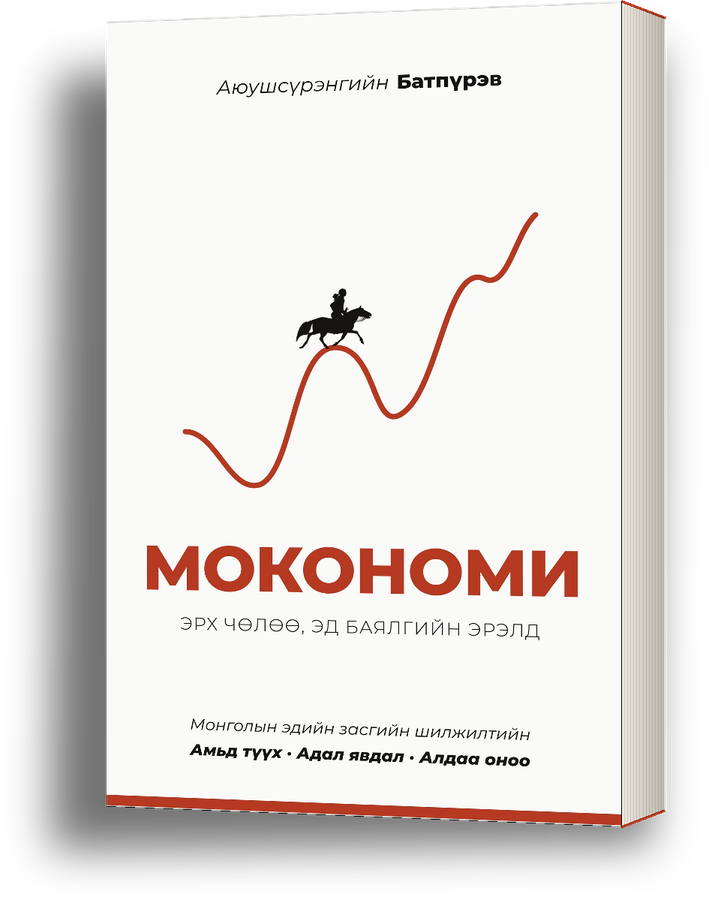
Moconomy
In Search of Freedom and Wealth
Mongolia’s economic transition:
Living history · Adventures · Mistakes and wins
From socialist shortages to the birth of the market, from saddlebag trading to the mining boom, from dreams of freedom to today’s economic choices — Mongolia’s story told through a living witness’s memories, hard facts and economic interpretation.
What kind of book is it?
A book about economics
that reads like Forrest Gump.
How did family life change as Mongolia’s economy transformed over the last 40 years?
“Moconomy” is a complete primer in economics and a documentary book of political economy. It ties personal memories to historic decisions and statistics; economic theory to everyday life; and policy critique to satirical storytelling.
- The life journey of one family
- The development experience of one country
- The fall and rise of one society
How it is written
- Personal journey → Social history
- Economic theory → Real-life cases
- Statistics → Film and culture references
- Policy critique → Satirical storytelling
- Business history → Public policy analysis
- Mongolia’s transition → Understanding the global economy
Not dry politics, not a textbook, not just a memoir.
A book that is engaging to read, easy to understand and worth keeping.
Why build it together?
A book written with your support
The core principle of this book is that Mongolia’s transition story is written with the support of many readers — not commissioned by a party, a company or a single sponsor.
01
Independent
Because funding comes from many readers, no single group or organisation can steer the content.
02
Fact-checked
The author shares his views, but explanations and conclusions rest on facts and analysis.
03
An educational legacy
The book’s content will become lectures, podcasts and programmes for the economic education of the younger generation.
You are not just buying a book — you are helping to record Mongolia’s economic history truthfully.
Contents
40 years = 8 chapters
The book is planned to tell Mongolia’s economic transition, from late socialism to today, through the key events and themes of each era in the following chapters.
I 1985–1990
Communism, the “Gobi Mirage”
- “Happy” but poor, “cheap” but scarce
- An economy that feels no pain
- Some animals are more equal
II 1990–1992
“Good Bye, Lenin”, Hello Crisis
- The price of freedom
- A bloodless revolution and shock therapy
- Different people, a different state
- Mongolia becomes an owner
III 1992–1996
The “Dirty Faces” Days
- The cost of transition
- A survival economy
- From countryside to city, from city to the world
- Financial collapse and reform
IV 1996–2004
The “Morning” of Capitalism
- Waves of new markets
- Businesses that grew from kiosks to conglomerates
- Economic hit men, or Mongolia opened to the world?
- Re-privatisation and life “beyond the bridge”
- Tabloids: politics–business–media
V 2004–2008
Minegolia — The Wild West
- Gold fever, coal frenzy
- Dreams of getting rich on licences
- From resources to construction
- At the crossroads: the «Four Fates»
VI 2008–2016
Show Time and the “Hangover”
- July 1 and resource populism
- Show Time — the super cycle
- Construction vs. debt
- Hangover — the tugrik tango
- Blessing or curse?
VII 2016–2025
From «Brigada» to «Parasite»
- The state-centred game returns
- The «Brigada» of the new Mongols
- COVID and state capitalism
- Life “as if becoming a bear”
- The core class of a «Parasite» society
VIII 2026+
«Under the Eternal Blue Sky»: a new beginning
- The path of the «Godfather»
- A leading Mongolia
- From pride to productivity
From the pages of the book
Get a feel for its tone
Read sample articles written in the book’s storytelling style.
Chapter II · 1990–1992
The night the price tags changed
My parents gave me 1 tugrik a day for tea money at school. A 60-mongo biscuit and a soft drink cost exactly that. Then one morning, on 16 January 1991, my tea money suddenly wasn’t enough for anything.
Chapter II · 1990–1992
A life measured in grams
In March 1991 each Ulaanbaatar resident’s monthly ration card allowed 1.8 kg of flour, 2.7 kg of meat and just 200 grams of sugar. Yet having a card did not guarantee a single bite of food.
Chapter II · 1990–1992
A country without light
With power cut at least twice a day for hours at a time, the single candle each family received on its ration card never lasted. When the electricity did come, it was so weak you waited forever for the pot on the hotplate to boil.
Who is it for?
Not only for economists
A book for anyone who wants to understand how the economy shapes their life.
The generation that lived the transition
Connect your own memories with the wider history and its economic explanation.
Young people born after 1990
“How and why did this country become what it is?”
Business, policy, education
A source for students, researchers, policymakers and managers.
Author
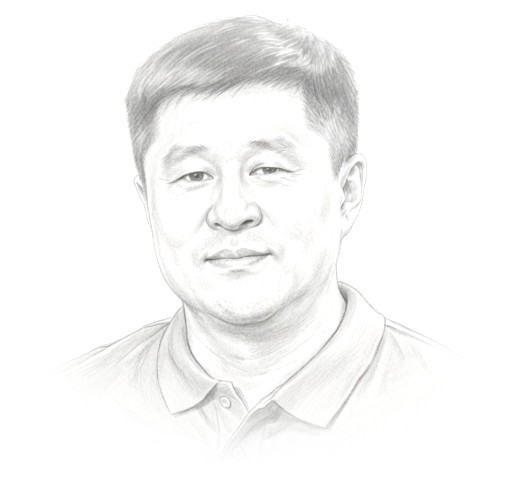
Ayushsuren Batpurev
Economist · Policy advisor · Journalist
Over 20 years of experience in financial markets, public finance, business management research and advisory work. Author of the Moconomy podcast and article series, which explain business, macroeconomics and complex financial issues in plain language.
Author and producer of the books “Life Finance” and “The Secret History of the Mongols for Children”, and the documentary projects “Xiongnu: History before History” and “Secret of the Black Banner”.
Support the creation
Let’s build Moconomy together
You are invited to help write Mongolia’s living economic history and bring it to readers.
plan 1
First Reader, Supporter
For those who want to hold the book first
50,000 ₮
- A copy of the first edition with a thank-you stamp
- Your name in the book’s acknowledgements
- A digital supporter certificate
- Short updates on editing, design and printing
plan 2
Co-creator, Supporter
For those who want to be more involved in creating the book
200,000 ₮
- A copy signed by the author with a personal note
- Access to the audiobook (produced after launch)
- An invitation to the book launch and discussions
- Your name in the book’s “Co-creators” section
- The right to send suggestions on the book’s content
Want to support another way? You can transfer any amount following the transfer instructions.
Transfer instructions
Send and register your support
Account details
Bank
Golomt Bank
Account number
[Account number]
Recipient
A. BATPUREV
Payment reference
Full name · Phone number
Example: Ayushsuren BATPUREV, 90904444
1 Choose your plan
«First Reader» – ₮50,000, «Co-creator» – ₮200,000
or any amount you choose.
2 Transfer to the account
Be sure to include your full name and phone number in the payment reference so your support is registered correctly.
3 Send your receipt
Send a photo of the payment receipt, your name and delivery address to mail@batpurev.mn or via social media.
4 Get confirmation
We will register your support and confirm by email or phone.
FAQ
Questions and answers
When will the book be published?
We plan to publish the book within 2026; the work is currently about 50% complete. Supporters will be the first to hear about progress, printing and the launch.
How will I receive the book?
After your support is sent and confirmed. We will agree the delivery address and format with you.
What will the funding be spent on?
Research, fact-checking, writing, editing, illustration, pre-press, printing and promotion. We will publish the spending breakdown openly here.
Can my organisation support it?
Yes. Please contact us about special sponsorship options.


You must be logged in to post a comment.